Home About us
A studio behind a shop, with the kilns always warm
In 2016 there was one wheel here, with a second-hand kiln, in an old bike workshop.
From Cornwall to here
Why tableware?
Mariska learned to throw in Cornwall, where they made a hundred bowls every day. That’s what she wanted too: tableware you actually use.
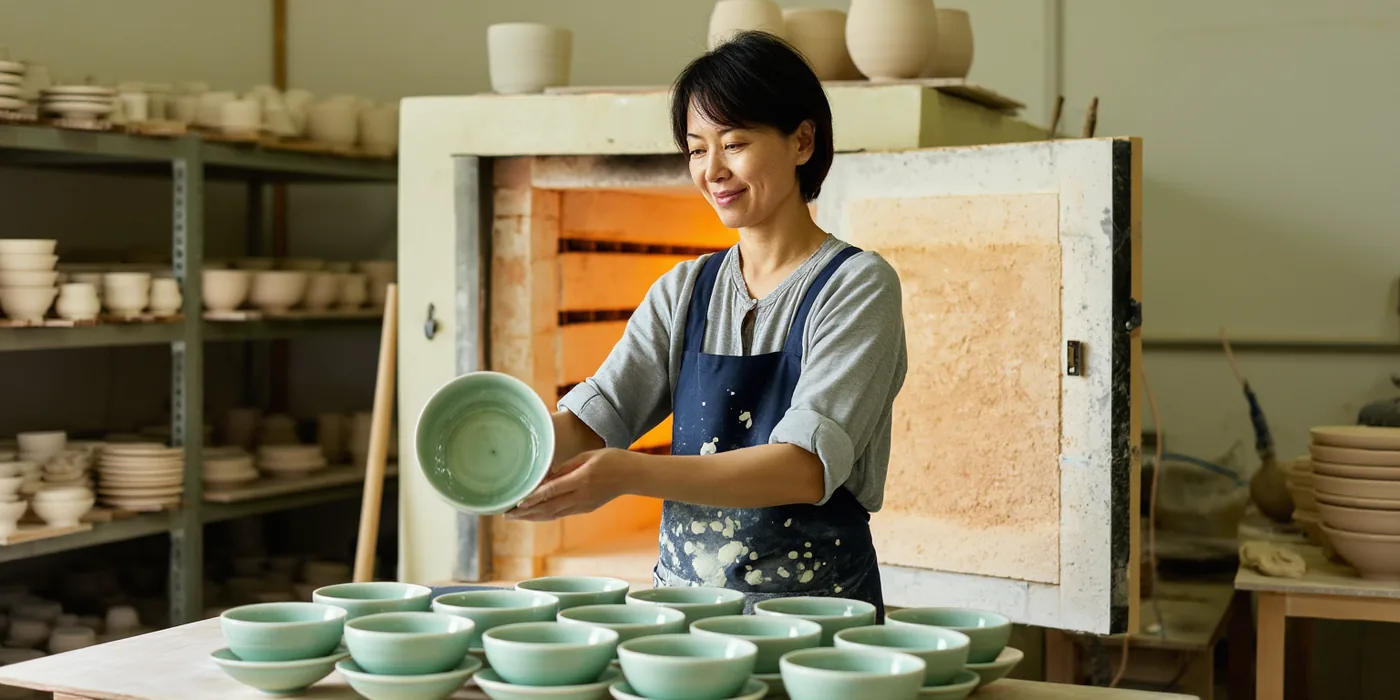
Back in the Netherlands, Mariska did the ceramics course and started in Voorbeeldstad, in an old bike workshop with one wheel and a second-hand kiln. At first she only threw for the market. Soon a few local restaurants asked for plates.
When more and more people asked if they could learn it themselves, the classes followed. Jaap, a former furniture maker, now teaches the evening courses. Olaf came as a student and stayed: he mixes the glazes and looks after the kilns.
“Clay forgets nothing. Every finger mark you make, you still see after firing.”Mariska Reinders
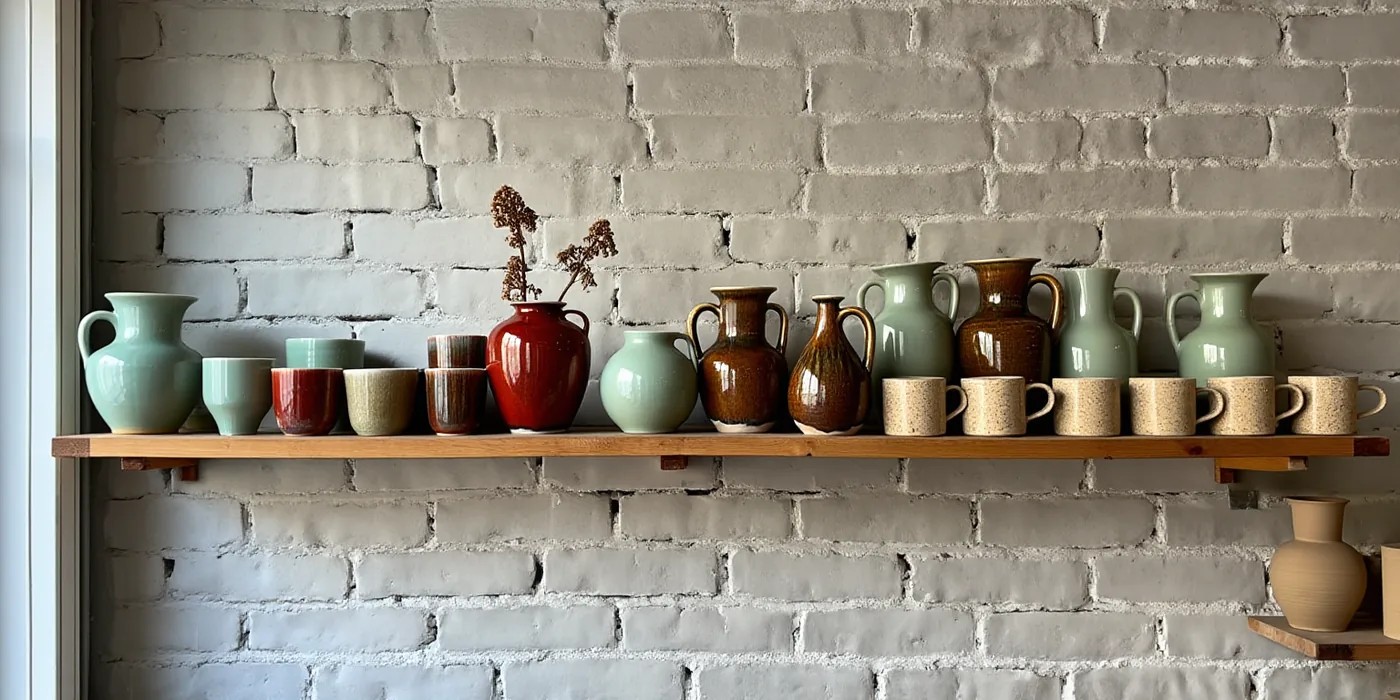
We work with one stoneware clay from the Westerwald, with small iron speckles. Those speckles rise up through the glaze in the kiln. That’s how you recognise our tableware.
All our glazes are lead-free and mixed by us. We test new colours on test tiles. Only when a glaze holds up in the dishwasher does it go into the shop.
Who’s who
Three people, six wheels, two kilns
Mariska Reinders
Potter and owner
Learned to throw at a pottery in England and then did the ceramics course. Throws all the tableware.
Jaap Claassen
Throwing course teacher
Teaches the evening classes. Was a furniture maker and has worked with clay for eight years now. Patient, and good at explaining.
Olaf Wiersum
Glazes and kilns
Mixes the glazes himself, tests every new colour on test tiles and keeps the firing log.
How we work
From lump to bowl
A piece is only finished after two firings. That’s why you collect your course work after about three weeks.
Throwing. The clay gets its shape on the wheel.
Trimming. After a day of drying we trim the foot.
Bisque. The first firing, at 950 °C.
Glazing. Dipping in one of our six glazes.
Glaze firing. The second firing, at 1240 °C.