Example C · Basis · 5 pages Fictional business, website by SGS · Why does this site work? · also Example A · Example B · Example D · ← all examples · Nederlands

Covered up to age 18, no referral needed

About this website

pick a page

About this website

Mon to Fri from 08:00 · 06 12345678

children’s physiotherapy in Voorbeeldstad
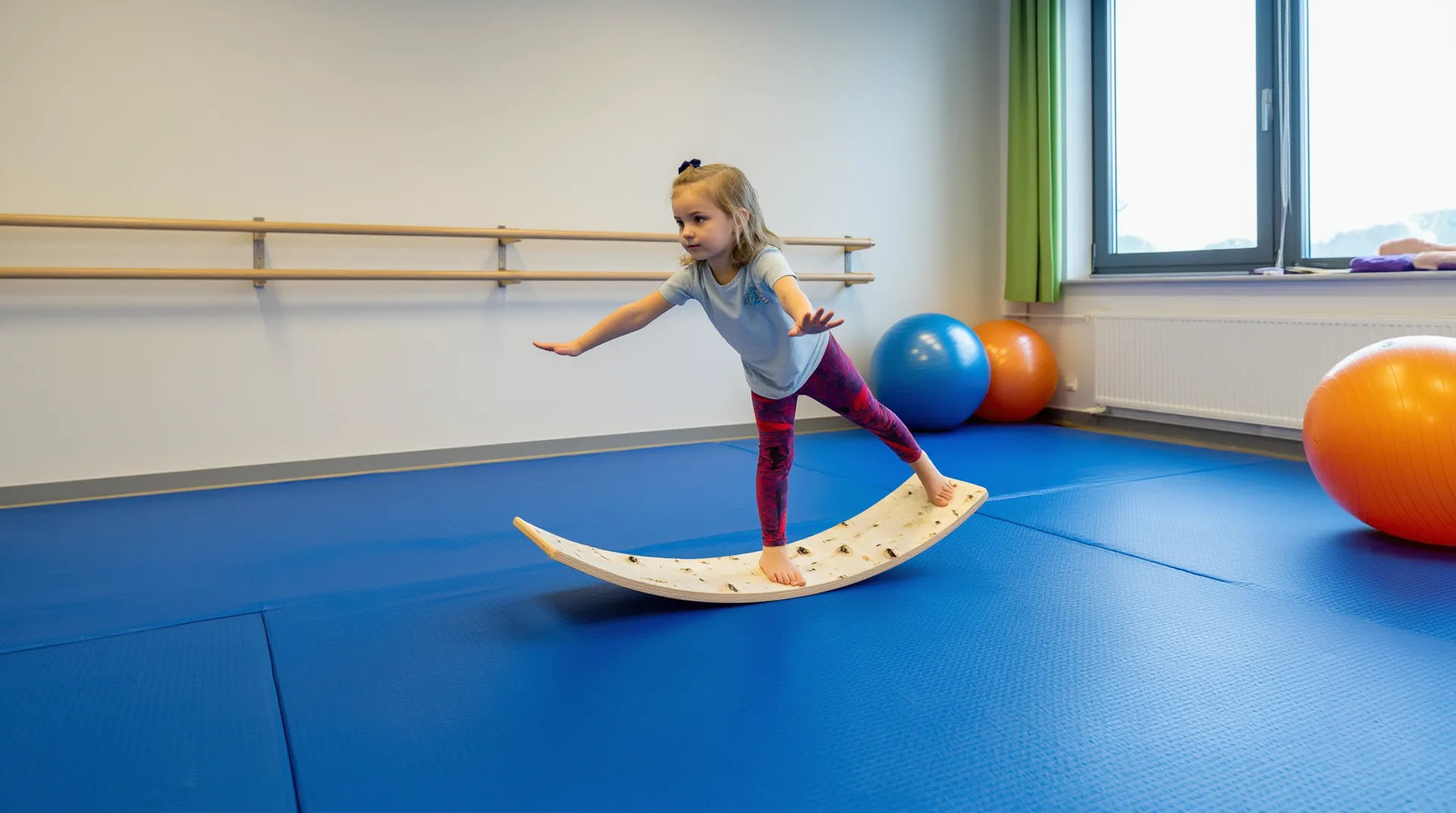
Who wobbles, learns to stand.

Bright children’s physiotherapy gym with a birch wobble board, blue gym mats, wall bars and large exercise balls; a five-year-old girl balances with her arms spread on the wobble board, soft daylight, wide shot
after schoolTue and Thu until 19:30, and we also come to school

Children’s physiotherapy for babies, toddlers, school children and young athletes. We practise with the climbing frame, wobble board and ball, and you take games home with you.

covered

Until your child turns 18, the insurer pays.

No upfront payment, no paperwork. Dealing with your insurer is our job.

What does it cost?
  • 9 + 9treatments a year from basic insurance
  • €0excess: children’s physiotherapy doesn’t come off it
  • 0referrals needed: you simply call yourself
  • 1×billing: we send the bill to your insurer
for whom

From the first roll
to the first match.

We see children from their first weeks of life up to eighteen. Every age needs something different, so we work by group.

0 – 1½ years

Babies

Positional preference, flat head, restlessness and slow motor development.

  • Positional preference and a flat head
  • Arching and restlessness
  • Rolling, sitting and crawling
More about babies

1½ – 6 years

Toddlers and pre-schoolers

Falling often, not daring to climb, run or jump.

  • Balance and coordination
  • Climbing, jumping and running
  • Cycling without stabilisers
More about toddlers and pre-schoolers

8 – 18 years

Young athletes

Growing pains, knee and heel problems, joining in safely again.
  • Osgood-Schlatter and Sever’s
  • Ankle and knee injuries
  • Strength and jumping technique
More about young athletes
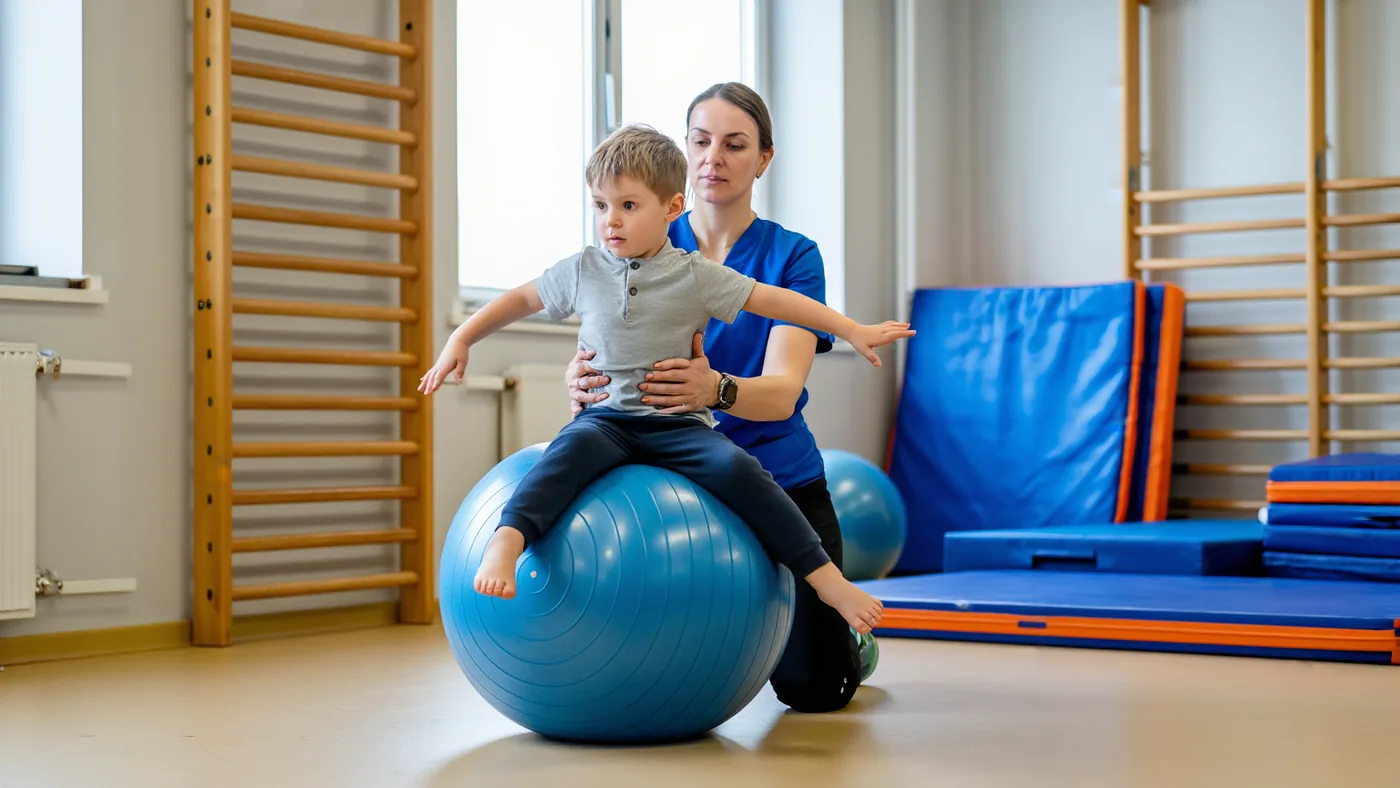
Six-year-old boy sits on a large blue exercise ball, children’s physiotherapist holds his hips, both concentrating, wall bars and mats in the background

in the gym

Sitting on the big ball looks like play. Meanwhile your child is working on core, balance and courage.

milestones

Every child has their own pace.
But within a window.

That is how wide the margins really are. Is your child clearly outside them, or are you unsure? Then we are happy to take a look.

The first eighteen months

  1. Lifting up on forearms on tummyusually between 2 and 5 months
  2. Sitting without supportusually between 3.8 and 9.2 months
  3. Crawling on hands and kneesusually between 5.2 and 13.5 months
  4. Standing with supportusually between 4.8 and 11.4 months
  5. Standing aloneusually between 6.9 and 16.9 months
  6. Walking aloneusually between 8.2 and 17.6 months
months0369121518

Windows from the WHO study of the motor development of more than 800 babies.

Toddler to school child

  1. Hopping on one legusually between 4 and 5.5 years
  2. Cycling without stabilisersusually between 4 and 6.5 years
  3. Skippingusually between 5 and 6.5 years
  4. Joined-up writingusually between 6.5 and 8 years
years3456789

Guidelines from practice. Every child has their own pace.

when to call?

Recognise anything on this list?

One point is usually no cause for concern. Recognise more, or does it keep nagging at you? Then feel free to call.

Baby

  • Always looks to the same side
  • Gets a flat spot on the head
  • Arches a lot or cries when lifted
  • Not rolling over after 7 months

Toddler and pre-schooler

  • Falls more often than others their age
  • Not walking alone after 18 months
  • Avoids climbing, running and jumping
  • Cycling or swimming lessons just aren’t working

School child

  • Grips the pen tightly
  • Writes slowly or illegibly
  • Complains of pain in the hand
  • Dreads PE lessons

Young athlete

  • Pain below the knee or in the heel
  • The same injury again and again
  • Stiff and clumsy during a growth spurt
  • Unsure whether it is time to go back
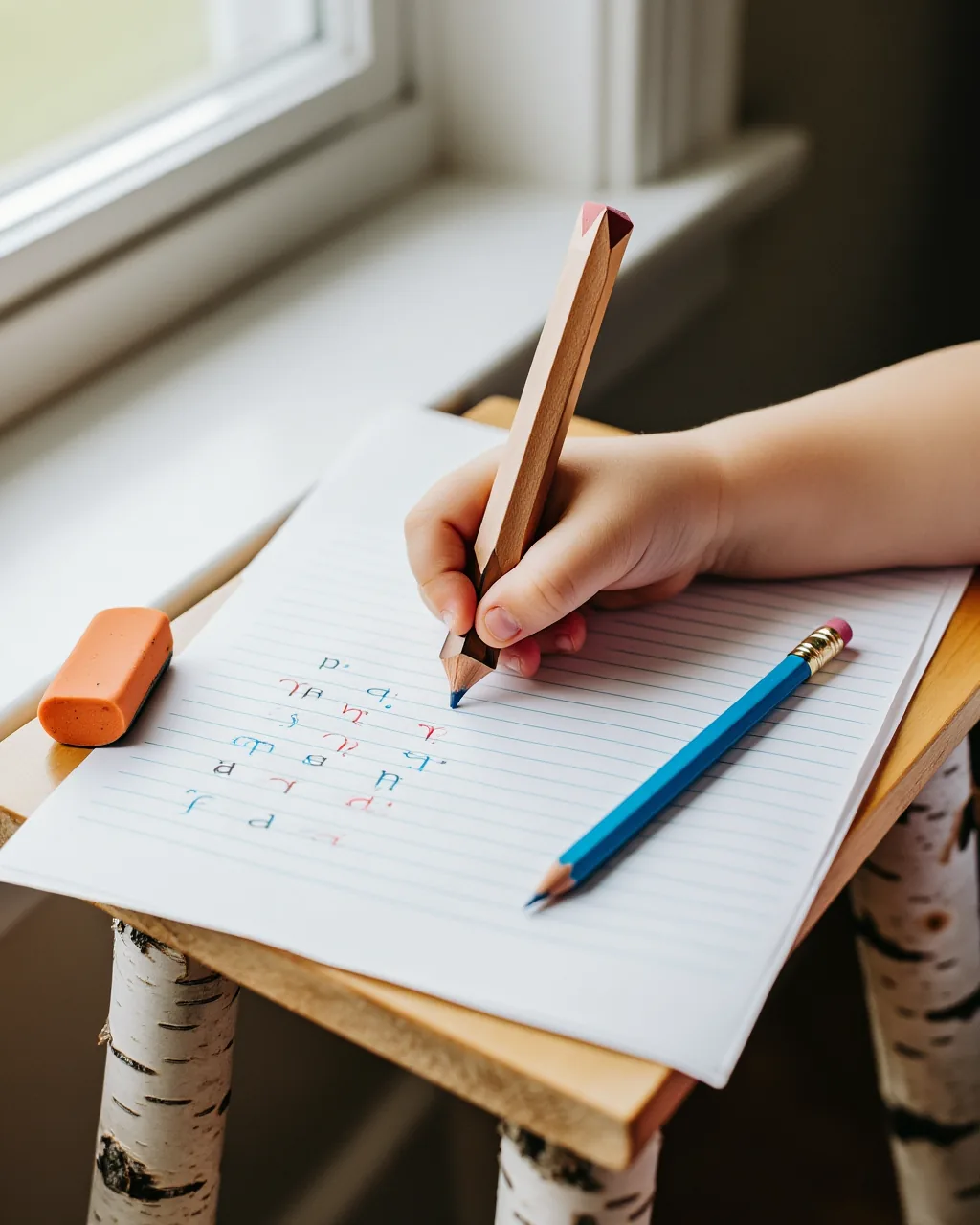
This is how children learn the a in Year 2: start at the dot, go anticlockwise, then down.
handwriting

Good handwriting starts at the shoulder.

If you sit firmly and have a relaxed shoulder, writing is easier. That is why Gwen doesn’t start with the exercise book, but with the chair, the core and the pen grip. Only then the letters.
  • Sitting posture, pen grip and pressure on the paper
  • Speed and legibility, using the school’s method
  • In the classroom too, agreed with the teacher
All about handwriting
A child’s hand, close up, writing letters with a triangular pencil on lined school paper, low table, soft light
how it works

From the first phone call
to practising on the sofa at home.

  1. 1

    Call or sign up

    Call us, or sign your child up online. Without a referral is fine too: then we start with a fifteen-minute screening.

  2. 2

    Meeting and observing

    Sixty minutes in the gym. We play, watch how your child moves and listen to your questions.

  3. 3

    Practising in the gym

    Usually half an hour a week, for six to ten weeks. You are there and join in.

  4. 4

    At home and at school

    You get an exercise card with games. If it helps, we consult the teacher or the coach.
More about our approach
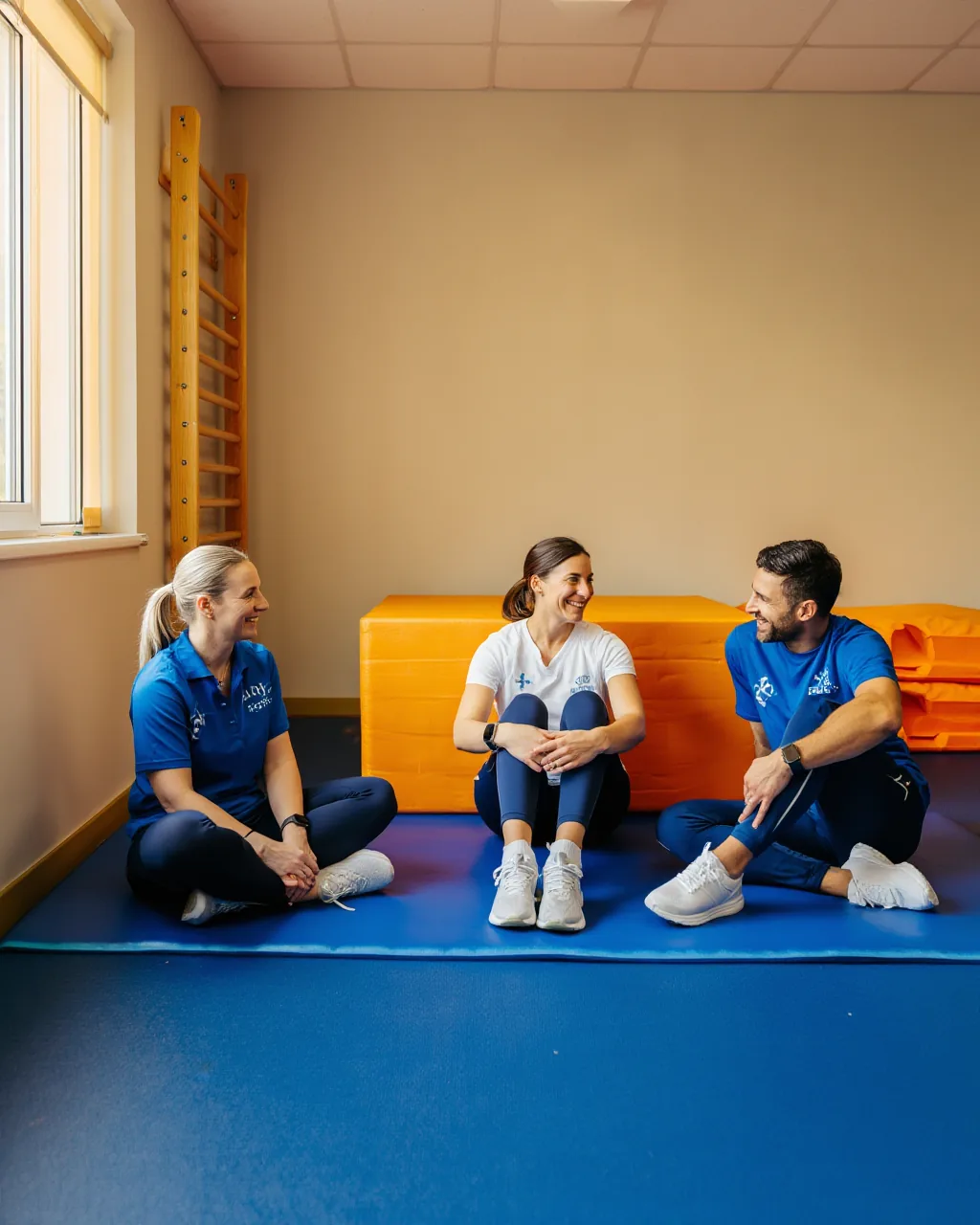
Three children’s physiotherapists (two women and a man, in their thirties) sit relaxed on a blue gym mat in the gym, wall bars behind them, sunlight from the side
the practice

Three therapists, one big gym.

Huppel is a small practice with three children’s physiotherapists and one large gym. Wall bars, wobble boards, a trampoline sunk into the floor, and a writing table at child height. Here your child practises without it feeling like practice.

  • Bianca CremersChildren’s physiotherapist MSc, owner
  • Gwen LammersChildren’s physiotherapist
  • Anouar DriessenChildren’s physiotherapist and sports physiotherapist
Meet us
call or WhatsApp06 12345678

Not quite sure yet?

Give us a call or come and have a look. Then you will hear whether we can help your child. No obligation and free of charge.