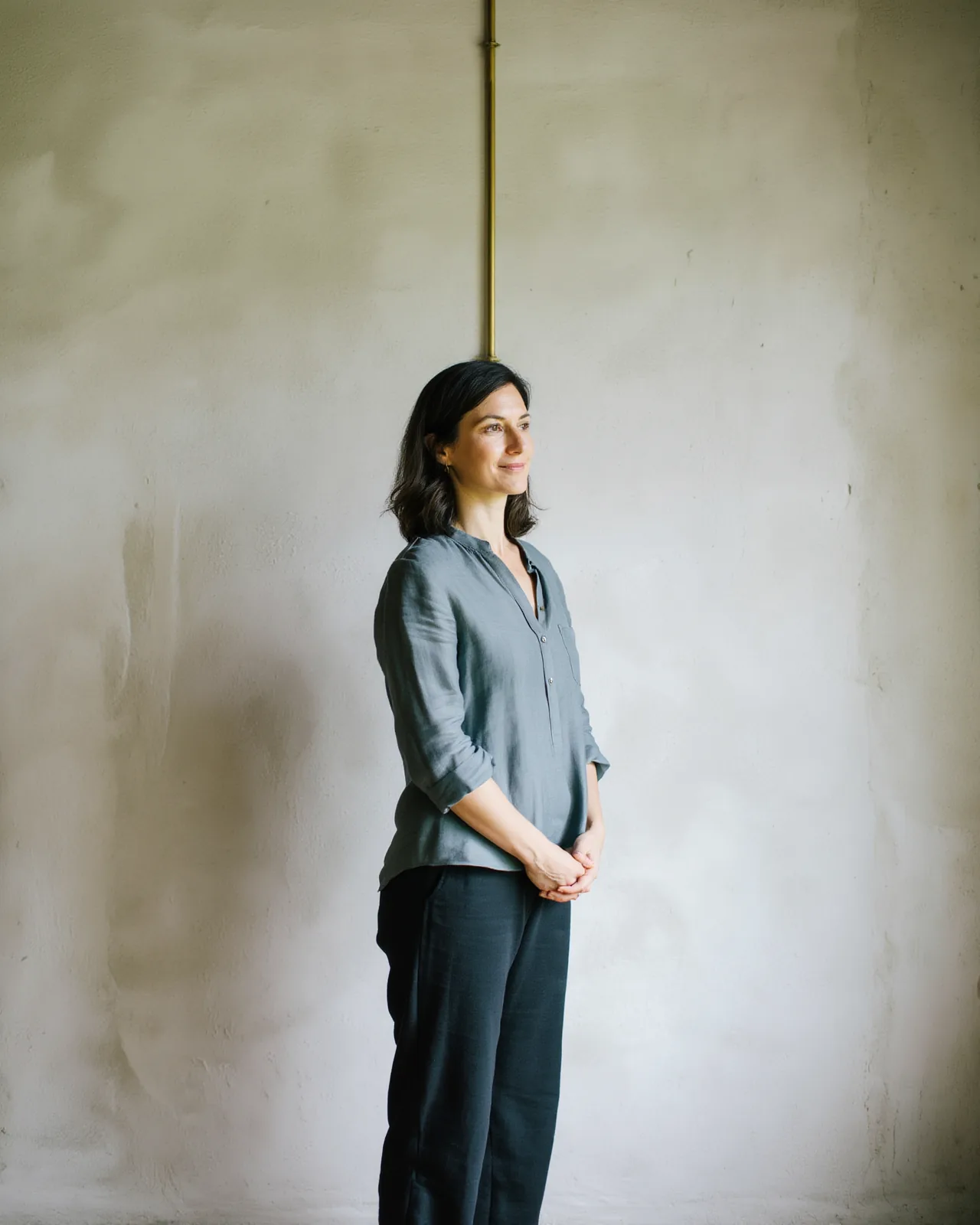
Side view of your spine. When your posture is well balanced, the plumb line runs through your ear, your shoulder and your hip.
From your neck to your pelvis
Twenty-four vertebrae, a sacrum and a tailbone. Wherever your complaint is, I always look at the whole spine. This is how it fits together.
C1 – C7 · seven cervical vertebrae
A five-kilo head
A headache around four o’clock, a neck that stiffens from all that screen work. Your head weighs about five kilos. If it drops a few centimetres forward, your neck muscles hold it all day. Together we find a position that takes less effort.
Your ribs are attached to your thoracic vertebrae. If your chest is locked, your breathing becomes high and fast and your shoulders tense up too. That is why breathing exercises often start here, with space between your ribs.
Your lumbar vertebrae are the largest in your back. They carry the load when you lift, bend or sit for a long time. Lower back pain is very common and usually goes away by itself. Moving helps more than lying still; I show you how.
How your pelvis sits determines the curve in your whole back. With long periods of standing, a tilted position, or during and after pregnancy, the assessment therefore starts at the bottom.
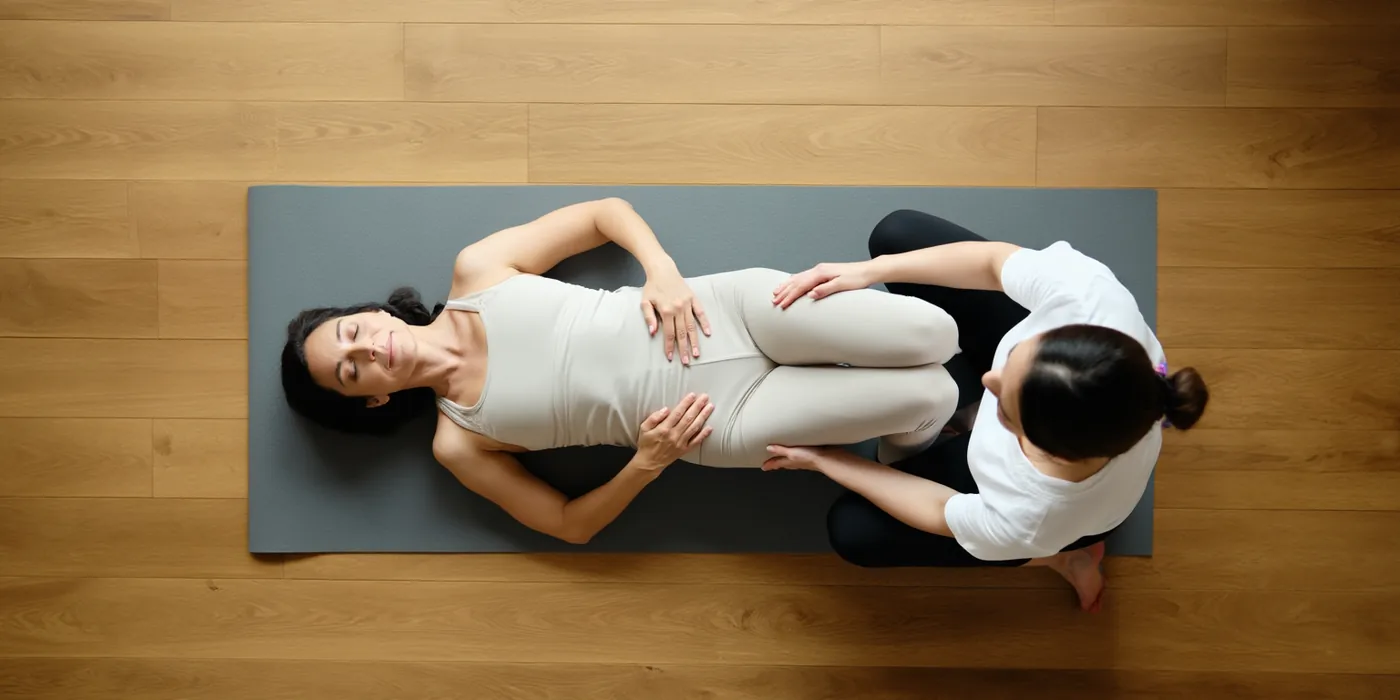
Learning to breathe lying down: often the first step with tension complaints.
Two methods, one goal: that you can do it yourself.
Mensendieck
conscious, in front of the mirror
You learn to see and feel what your body does, and you adjust it yourself. Precise and calm, with lots of attention to small things: how you place your feet, where your breath sits.
Cesar
rhythmic, from your whole body
You copy movements until they come naturally. Looser and more rhythmic, with the focus on how your whole body works together when you lift, walk or reach.
I am trained in both and choose per person. Often it becomes a mix.
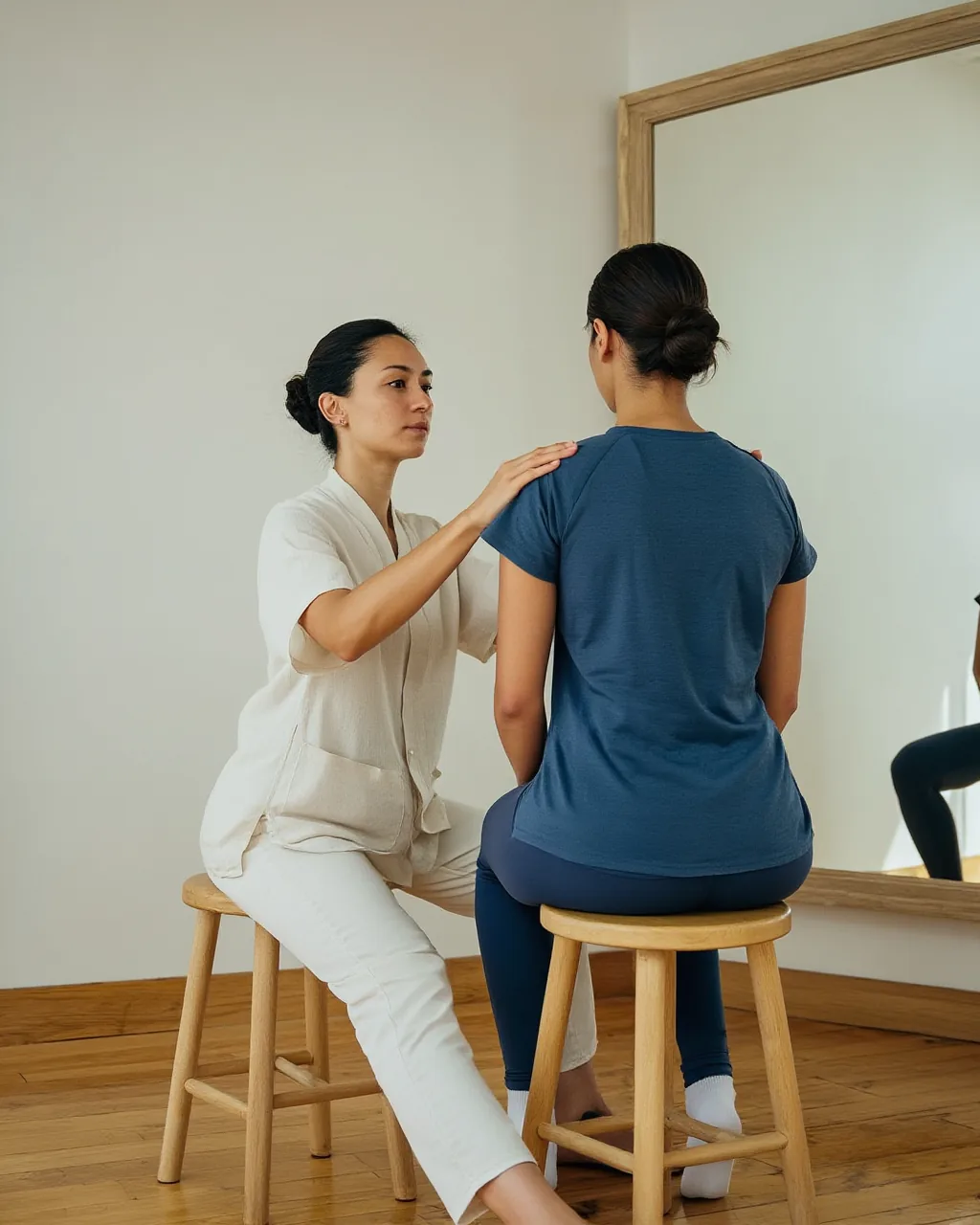
In front of the mirror: you see for yourself what happens.
Your first hour with me
The intake takes an hour. That is long, and on purpose. Only when I know your story and have seen how you move can we do something that works.
0:00
Your story
What is going on, since when and what have you already tried? I also ask about your work, your sleep and what you would like to be able to do again.
0:20
Looking
I look at you standing, sitting, bending and walking. Along the plumb line and in the mirror. A vest or sports top is handy; your clothes are fine too.
0:40
Explanation
What I see and what I think is happening, in plain words. Then we make a plan together: how often, how long, and your homework.
0:50
Your first exercise
One exercise you can do at home straight away. Not ten. It goes home with you on paper, with a drawing.
After that you usually see me for about eight half-hour sessions. You can read what comes next in how I work.
You can come to me straight away. And it is usually covered.
Supplementary insurance? Then my bill goes straight to your insurer. Nothing lands on your doormat.
Under eighteen? Then your basic insurance pays, with no excess.
Paying yourself? A half-hour treatment costs €49. The one-hour intake €72.50.