Contact
With both feeton the ground.
Describe what you see on your tree. You'll have a climber on the line within two working days, and we usually come and look the same week.
Read the questions firstRequest
Request a fixed price
Frequently asked questions
Questions from tree owners
Do I need a felling permit?
That depends on your municipality and the thickness of the trunk. In Voorbeeldstad you need an environmental permit from a trunk girth of 90 cm, measured at 1.30 m height. We check it for you and apply for the permit if needed.
Can you work in the nesting season?
Yes, but first the climber searches the crown for nests. If there's an occupied nest, that part of the tree stays or we come back later. That applies all year, but especially between 15 March and 15 July.
Do I need to take time off?
Not necessarily. If the garden is accessible and we've agreed things beforehand, we can get on with it while you're at work. After the job you get a few photos via WhatsApp.
What happens to the wood?
We chip the branches on site. We saw the trunk into logs: leave them for the stove or have us take them, your choice.
Can you prune the neighbours' branches?
You may have branches removed that hang over the boundary. We do talk to the neighbours first, because it's their tree. Neighbours often split the bill.
Are you insured?
Yes, through our liability insurance: up to €2.5 million per incident, including work above roofs and greenhouses.
Will my lawn get ruined?
We'd rather not, and usually it doesn't. We lay ground protection mats and lower heavy pieces on ropes instead of dropping them.
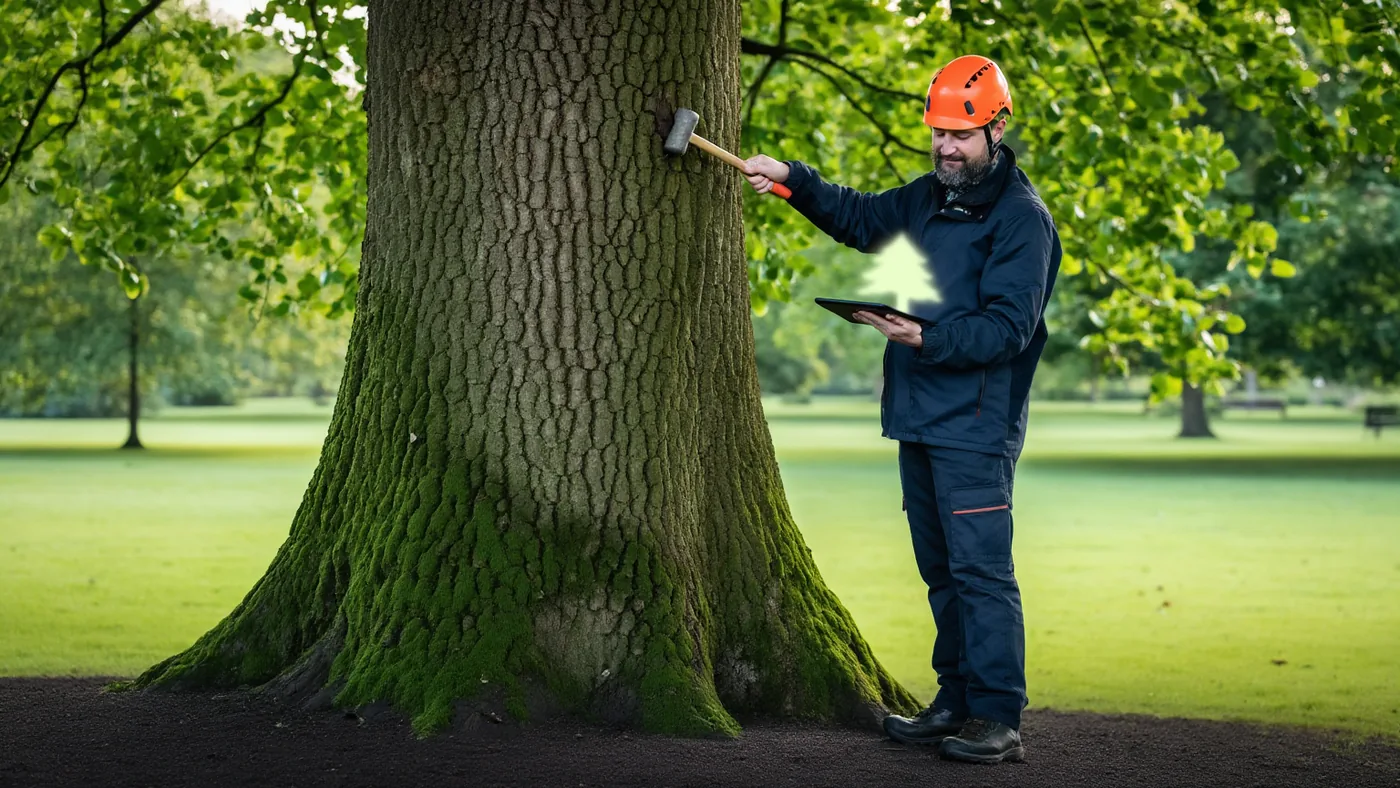
An inspection always starts at the bottom, at the base of the trunk. That's where a tree tells you the most.