A weigh house from 1658, a grand café since 1924
About us
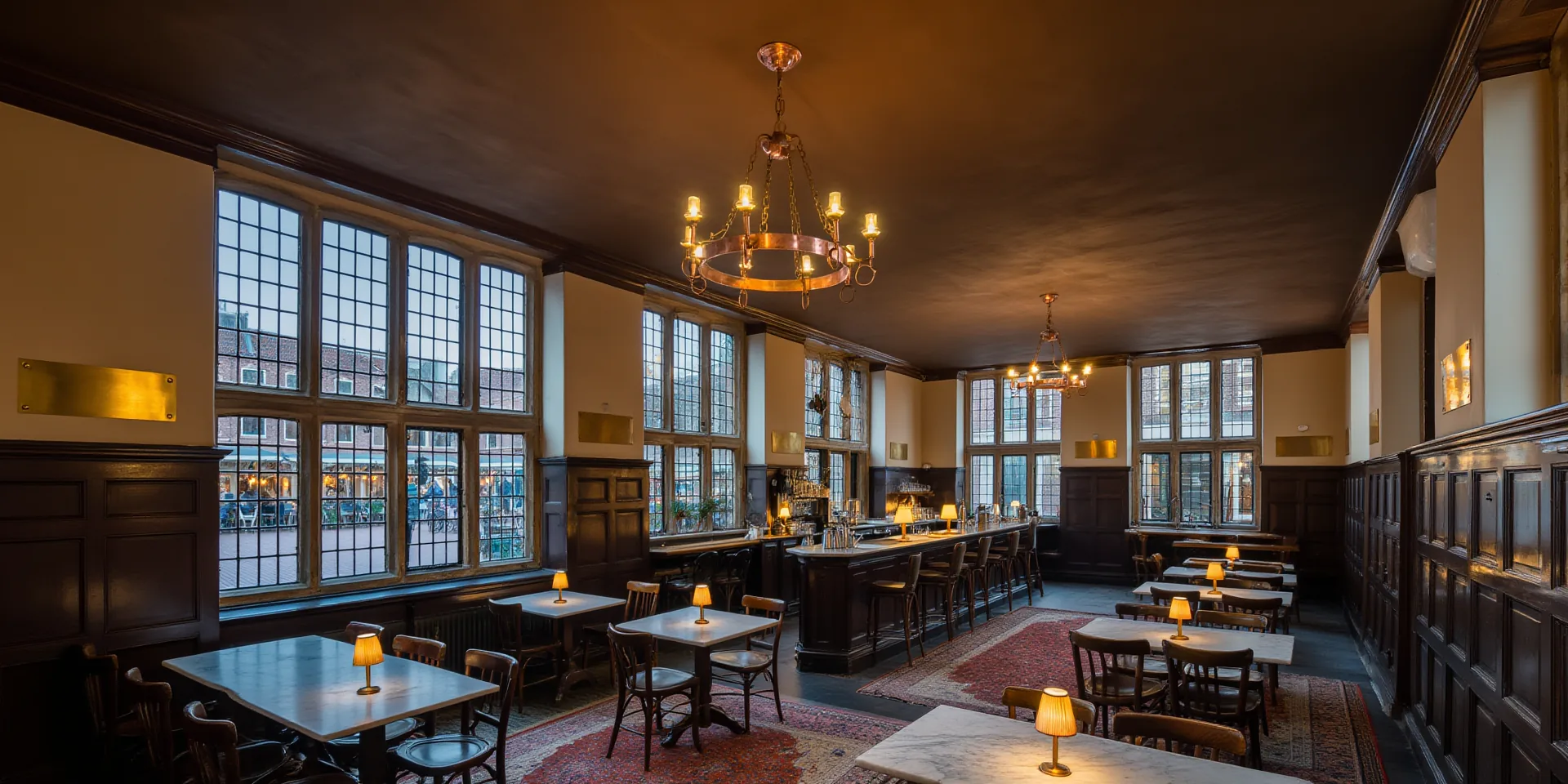
De Oude Waag has been a grand café since 1924. Where farmers once had their cheese weighed, there are now marble tables, a long bar and a billiard table. We keep it the way it should be: welcoming, brown and always a free chair at the reading table.
Home / About us
Chapter one · The house
Where the cheese was weighed
For almost three centuries farmers from the area came here to have their cheese weighed. The weighmaster read the weight and the town levied tax on it.
In 1921 the last cheese came off the beam. Three years later a grand café opened in the empty weigh house, with chandeliers, marble and oak. The building is a rijksmonument (national listed building); the front with the town's coat of arms and the year 1658 is still exactly as it was.
Chapter two · A hundred years
From weigh house to grand café
- 1658
The Waag is built
A stone weigh house rises on the Kaasmarkt. Farmers from the area have their cheese and butter weighed here. Stock is kept in the loft.
- 1921
The last cheese
The weighmaster takes the last cheese off the beam. The market moves, and the building stands empty for three years.
- 1924
The grand café opens
In come marble tables, oak panelling, eight chandeliers and a long bar. The town immediately calls it De Oude Waag.
- 1938
The billiard table arrives
A 2.84-metre carom billiard table gets a permanent spot at the back. It's still there.
- 1971
The Tuinstra family
Riemer and Doortje Tuinstra take over the business. They start the reading table and the first regular billiards night.
- 2008
The ceiling stays brown
Smoking indoors is banned. We don't paint over the ceiling: that colour belongs to the house.
- 2019
The Waagzaal
The old loft becomes a party room. The weighing beam finds a place above the bar.
- 2024
A hundred years
A week of celebrations for the whole town. Jildou and Casper Tuinstra, the third generation, are behind the bar.
Chapter three · What's still here
The interior
- Eight chandeliersBrass, from 1924. Every winter they come down one by one to be polished.
- Oak panellingUp to shoulder height along every wall, darkened by a hundred years of hands and coats.
- The smoke ceilingEighty years of cigars and pipes. Nobody has smoked here since 2008, but the colour stayed.
- Marble tablesTwenty-two of them, each with a Persian rug, as is proper under a smoke-brown ceiling.
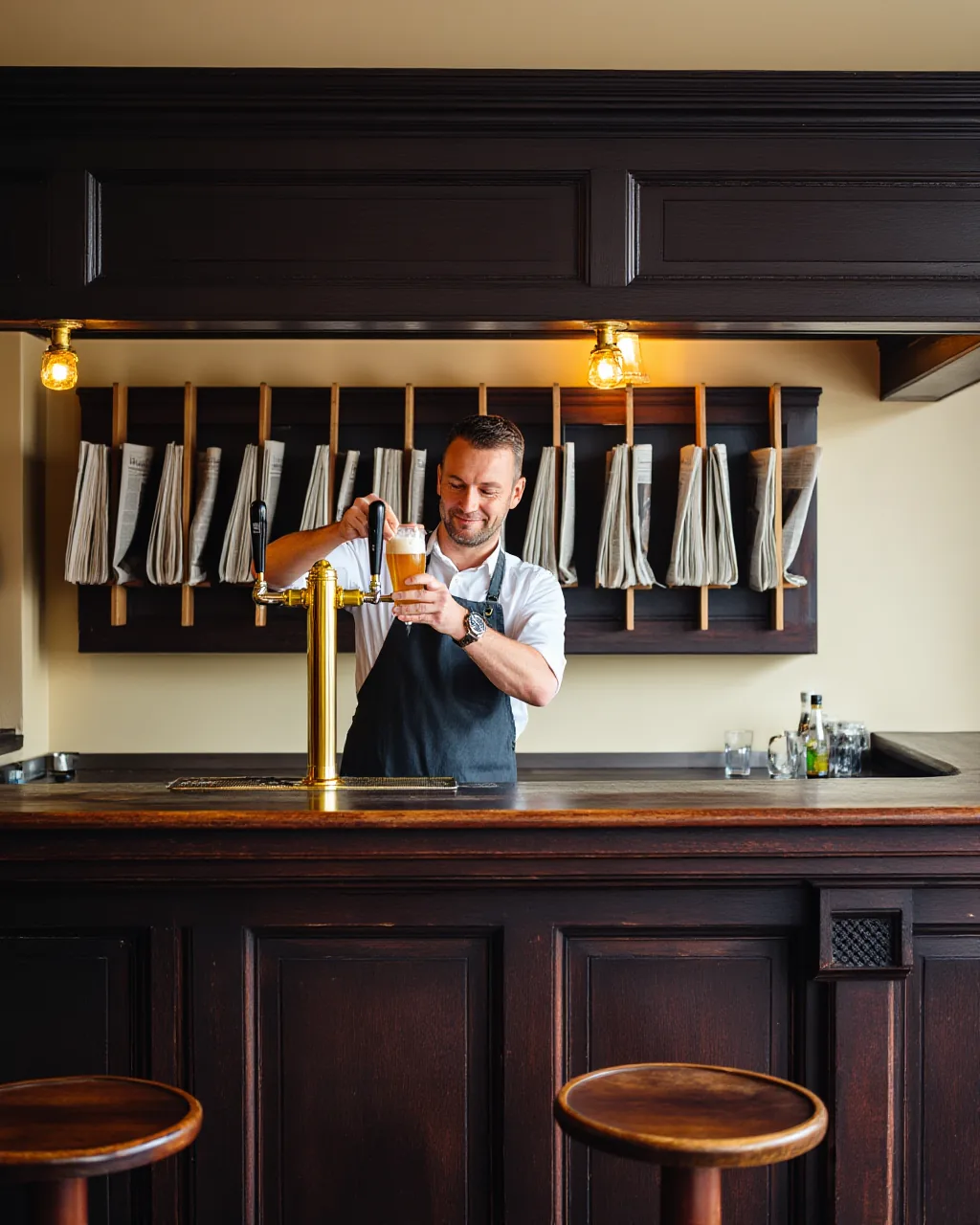
- The reading tableA long oak table under the window, with nine newspapers on wooden sticks.
- The billiard tableA carom table from 1938 under a low copper lamp. The cloth is green, the balls white, yellow and red.
Chapter four · The people
Behind the bar and in the kitchen
Jildou Tuinstra
Owner, front of house
Knows which paper every regular reaches for first.
Casper Tuinstra
Owner, bar
Has been pulling pints for thirty years and picks the seasonal beer every quarter.
Jolien Hofstra
Head chef
Makes the beef stew and the bitterballen, and puts the soup on at eight.
Pepijn Schaap
Waagzaal and parties
Plans every party with you, from the first tour to last orders.
Chapter five · In numbers
De Oude Waag in four plaques
- 1924grand café since
- 12taps at the bar
- 120guests in the Waagzaal
- 9papers on the reading sticks
Book
Fancy a look inside?
Come for a coffee at the reading table, or book a table for dinner.
You can also call: 06 12345678